In today's fast-paced world, children are often pushed to the limits, both physically and mentally. They are constantly bombarded with information, technology, and demands, which can leave them feeling stressed, anxious, and overwhelmed. One way to help children cope with these challenges is to introduce them to mindful movement.
Mindful movement is a practice that combines physical activity with mindfulness, the practice of paying attention to the present moment without judgment. Mindful movement has been shown to have a number of benefits for children, including improved attention and focus, reduced stress and anxiety, improved emotional regulation, increased self-awareness, and improved physical health.
Improved Attention and Focus
Mindful movement helps children to develop their attention and focus by teaching them to pay attention to their bodies and their surroundings. By focusing on their breath, their movements, and the sensations in their bodies, children can learn to tune out distractions and stay present in the moment.
Reduced Stress and Anxiety
Mindful movement has been shown to reduce stress and anxiety levels in children. By teaching them to focus on their breath and to calm their bodies, mindful movement can help children to manage their emotions and find a sense of inner peace.
Improved Emotional Regulation
Mindful movement helps children to learn how to regulate their emotions by teaching them to focus on their breath and to calm their bodies. This can help children to better manage their emotions and to respond to stressful situations in a more measured and effective way.
Increased Self-Awareness
Mindful movement helps children to develop their self-awareness by teaching them to pay attention to their bodies and their thoughts. By learning to tune in to their bodies and their inner experiences, children can develop a deeper understanding of themselves and their needs.
Improved Physical Health
Mindful movement is a great way for children to improve their physical health by getting regular exercise. By engaging in mindful movement activities, children can improve their strength, flexibility, and overall physical fitness.
How to Incorporate Mindful Movement into Your Child's Life
Incorporating mindful movement into your child's life can be a simple and effective way to support their overall well-being. Here are some tips for how to get started:
Start with Short Practices
Begin with short, 5-10 minute mindful movement practices and gradually increase the duration as your child becomes more comfortable with the practice.
Make it Fun
Incorporate playful and engaging elements into your mindful movement activities to keep your child interested and engaged.
Involve the Whole Family
Encourage the whole family to participate in mindful movement practices together to create a supportive and nurturing environment.
Establish a Routine
Designate a specific time each day or week for mindful movement practice to help it become a habit.
Use Visual Aids
Incorporate visual aids such as pictures, videos, or props to help your child better understand and engage with the practice.
Tailor to Your Child's Needs
Adapt the mindful movement activities to suit your child's age, interests, and abilities to ensure they are getting the most out of the practice.
Encourage Exploration
Encourage your child to explore and experiment with different mindful movement activities to find what works best for them.
Mindful Movement Activities for Children
There are many different types of mindful movement activities that can be enjoyed by children. Here are some examples:
Yoga
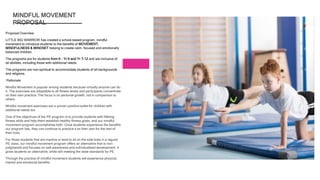
Yoga is a great way for children to practice mindful movement. Yoga poses, known as asanas, can help children develop strength, flexibility, and balance, while also promoting mindfulness and self-awareness.
Tai Chi
Tai chi is a slow, flowing martial art that can be adapted for children. Tai chi movements can help children develop coordination, focus, and a sense of inner calm.
Dance
Dancing is a fun and creative way for children to engage in mindful movement. Children can explore different styles of dance, such as ballet, hip-hop, or contemporary, while also practicing mindfulness and self-expression.
Mindful Walking
Mindful walking is a simple practice that can be done anywhere. Children can focus on the sensations of their feet touching the ground, the movement of their bodies, and their breath as they walk.
Mindful Stretching
Mindful stretching is a gentle way for children to practice mindful movement. Children can focus on the sensations in their bodies as they stretch, paying attention to their breath and any areas of tension or discomfort.
Mindful Games
Mindful games, such as Simon Says or Freeze Dance, can be a fun way for children to practice mindful movement while also engaging in physical activity.
Mindful Exploration
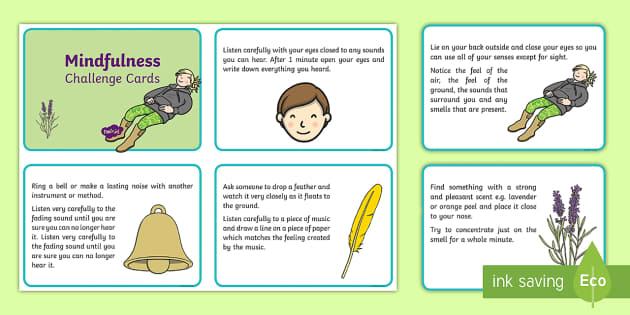
Mindful exploration involves using the senses to explore the environment. Children can touch, smell, and observe objects in their surroundings, practicing mindfulness and curiosity.
The Importance of Mindful Movement for Children's Development
Mindful movement is not just a fun and engaging activity for children, but it also plays a crucial role in their overall development. Here's a closer look at the importance of mindful movement for children:
Physical Development
Mindful movement activities, such as yoga and tai chi, can help children develop physical skills like coordination, balance, and flexibility. These physical benefits can have a positive impact on children's overall physical health and well-being.
Emotional and Mental Development
Mindful movement has been shown to have a positive impact on children's emotional and mental well-being. By teaching children to be present and focused, mindful movement can help reduce stress and anxiety, improve emotional regulation, and foster a greater sense of self-awareness.
Social and Cognitive Development
Mindful movement can also support children's social and cognitive development. By engaging in group activities or practicing mindfulness together, children can learn to better cooperate, communicate, and empathize with others. Additionally, the focus and attention required in mindful movement can also support children's cognitive skills, such as problem-solving and decision-making.
Holistic Development
Ultimately, mindful movement supports children's development in a holistic way, addressing their physical, emotional, mental, and social needs. By incorporating mindful movement into their lives, children can develop a well-rounded set of skills and resources to navigate the challenges of growing up.
The Role of Mindful Movement in Children's Education
Mindful movement is not just a valuable practice for children outside of the classroom, but it can also be integrated into the educational setting to support children's learning and development.
Improved Classroom Engagement
Incorporating mindful movement activities into the school day can help children to be more engaged and focused in the classroom. By taking breaks to practice mindful movement, children can refresh their minds and bodies, improving their ability to pay attention and participate in lessons.
Enhanced Academic Performance
Research has shown that mindful movement can have a positive impact on children's academic performance. By improving focus, concentration, and emotional regulation, mindful movement can help children to better retain information, problem-solve, and perform on tests and assignments.
Reduced Behavioral Issues
Mindful movement can also help to reduce behavioral issues in the classroom. By providing children with a healthy outlet for their energy and emotions, mindful movement can help to prevent disruptive or disruptive behaviors and promote a more positive and productive learning environment.
Improved Social-Emotional Learning
Mindful movement can also support children's social-emotional learning, which is an essential aspect of their overall development. By teaching children to be more self-aware, empathetic, and socially responsible, mindful movement can help them to navigate the complex social dynamics of the classroom and school community.
Integration with Curriculum
Mindful movement can be integrated into a variety of subject areas, from physical education to language arts and science. By incorporating mindful movement activities into the curriculum, educators can help children to connect their physical, mental, and emotional experiences with their academic learning.
Professional Development for Educators
To effectively incorporate mindful movement into the educational setting, it's important for educators to receive proper training and professional development. By learning about the benefits of mindful movement and how to lead these practices, educators can feel more confident and prepared to support their students' well-being and learning.
Mindful Movement as a Way to Reduce Stress and Anxiety in Children
In today's fast-paced world, children are increasingly experiencing high levels of stress and anxiety. Mindful movement can be a powerful tool for helping children manage these challenging emotions and experiences.
Understanding Stress and Anxiety in Children
Stress and anxiety in children can manifest in a variety of ways, including physical symptoms like headaches or stomachaches, emotional symptoms like irritability or mood swings, and cognitive symptoms like difficulty concentrating or overthinking. These experiences can have a significant impact on a child's overall well-being and development.
How Mindful Movement Can Help
Mindful movement can be an effective way to help children cope with stress and anxiety. By engaging in physical activity while also practicing mindfulness, children can learn to:
- Regulate their emotions and calm their bodies
- Develop a greater sense of self-awareness and inner calm
- Reduce physical tension and discomfort
- Improve their ability to focus and concentrate
Specific Mindful Movement Practices
Some specific mindful movement practices that can be particularly helpful for reducing stress and anxiety in children include:
- Yoga: The combination of physical postures, breath work, and meditation can help children cultivate a sense of inner peace and relaxation.
- Tai Chi: The slow, flowing movements of tai chi can help children learn to move with grace and intention, reducing stress and promoting a sense of calm.
- Mindful Walking: The simple act of walking while focusing on the sensations in the body and the breath can be a powerful way to ground and center children.
Incorporating Mindful Movement into Daily Life
To help children reap the benefits of mindful movement for stress and anxiety reduction, it's important to incorporate these practices into their daily lives. This might involve setting aside time for a mindful movement practice each day, incorporating short mindfulness breaks throughout the day, or finding ways to integrate mindful movement into other activities, like during recess or after-school programs.
Mindful Movement as a Tool for Improving Children's Focus and Concentration
In today's world, children are constantly bombarded with distractions and stimuli, making it increasingly difficult for them to maintain focus and concentration. Mindful movement can be a powerful tool for helping children develop these essential cognitive skills.
The Importance of Focus and Concentration
Focus and concentration are critical skills for children's academic, social, and emotional development. They enable children to engage in tasks, learn new information, and regulate their emotions. When children struggle with focus and concentration, it can have a significant impact on their overall well-being and success.
How Mindful Movement Can Help
Mindful movement can be an effective way to help children improve their focus and concentration. By engaging in physical activity while also practicing mindfulness, children can learn to:
- Reduce distractions and stay present in the moment
- Develop stronger attentional control and self-regulation
- Improve their ability to retain and recall information
- Enhance their problem-solving and decision-making skills
Specific Mindful Movement Practices
Some specific mindful movement practices that can be particularly helpful for improving focus and concentration in children include:
- Yoga: The combination of physical postures, breath work, and meditation can help children learn to focus their attention and reduce mental chatter.
- Tai Chi: The slow, flowing movements of tai chi can help children develop a greater sense of body awareness and control, which can support their ability to focus.
- Mindful Walking: The act of walking while focusing on the sensations in the body and the breath can help children learn to direct their attention and stay present.
Incorporating Mindful Movement into Daily Life
To help children reap the benefits of mindful movement for improving focus and concentration, it's important to incorporate these practices into their daily lives. This might involve setting aside time for a mindful movement practice each day, incorporating short mindfulness breaks throughout the day, or finding ways to integrate mindful movement into other activities, like during homework or study time.
Mindful Movement as a Way to Promote Self-Awareness and Body Positivity in Children
In a world that often emphasizes physical appearance and outward success, it's important to help children develop a strong sense of self-awareness and body positivity. Mindful movement can be a powerful tool for supporting these important aspects of children's development.
The Importance of Self-Awareness and Body Positivity
Self-awareness and body positivity are essential for children's overall well-being and healthy development. When children have a positive and accepting relationship with their bodies, they are more likely to engage in healthy behaviors, develop strong self-esteem, and feel empowered to navigate the challenges of growing up.
How Mindful Movement Can Help
Mindful movement can be an effective way to help children develop self-awareness and body positivity. By engaging in physical activity while also practicing mindfulness, children can learn to:
- Develop a greater understanding and appreciation of their bodies
- Cultivate a sense of self-acceptance and self-compassion
- Recognize and celebrate the unique strengths and abilities of their bodies
- Reduce negative self-talk and body-related anxieties
Specific Mindful Movement Practices
Some specific mindful movement practices that can be particularly helpful for promoting self-awareness and body positivity in children include:
- Yoga: The focus on body awareness and self-acceptance in yoga can help children develop a more positive relationship with their bodies.
- Dance: The expressive and creative nature of dance can empower children to celebrate the unique capabilities of their bodies.
- Mindful Exploration: Activities that involve using the senses to explore the body and its movements can help children develop a greater appreciation for their physical selves.
Incorporating Mindful Movement into Daily Life
To help children reap the benefits of mindful movement for promoting self-awareness and body positivity, it's important to incorporate these practices into their daily lives. This might involve setting aside time for a mindful movement practice each day, encouraging children to engage in self-reflection and body-positive affirmations, or finding ways to integrate mindful movement into other activities, like during family time or social events.
Tips for Parents on How to Support Their Children's Mindful Movement Practice
As a parent, you play a crucial role in supporting your child's mindful movement practice. Here are some tips to help you effectively incorporate mindful movement into your child's life:
Lead by Example
Children are more likely to engage in mindful movement if they see their parents or caregivers modeling the practice. Make sure to set aside time for your own mindful movement practice and invite your child to join you.
Make it Fun and Engaging
Incorporate playful and creative elements into your child's mindful movement practice to keep them interested and engaged. Use music, stories, or games to make the experience enjoyable.
Encourage Exploration and Experimentation
Encourage your child to try different types of mindful movement activities and to explore what works best for them. This can help them find a practice that they truly enjoy and feel connected to.
Provide Positive Reinforcement
Celebrate your child's progress and achievements, no matter how small. Positive reinforcement can help build their confidence and motivation to continue their mindful movement practice.
Adapt to Your Child's Needs
Be flexible and adaptable in your approach to mindful movement. Pay attention to your child's mood, energy levels, and interests, and adjust the practice accordingly.
Involve the Whole Family
Encourage the entire family to participate in mindful movement practices together. This can help create a supportive and nurturing environment for your child's practice.
Seek Out Resources and Support
Reach out to local mindfulness or yoga studios, schools, or community organizations to find resources and support for your child's mindful movement practice.
Resources for Parents and Educators on Mindful Movement for Children
If you're interested in incorporating mindful movement into your child's life or your educational setting, there are a variety of resources available to help you get started. Here are some examples:
Books
- "Mindful Movements: Ten Exercises for Well-Being" by Thich Nhat Hanh
- "Yoga for Children: 200+ Yoga Poses, Breathing Exercises, and Meditations for Healthier, Happier, More Resilient Children" by Lisa Flynn
- "The Mindful Child: How to Help Your Kid Manage Stress and Become Happier, Kinder, and More Compassionate" by Susan Kaiser Greenland
Online Resources
- Mindful Schools: https://www.mindfulschools.org/
- Yoga Ed: https://www.yogaed.com/
- Calm: https://www.calm.com/schools
Apps
- Breathe, Think, Do with Sesame
- Smiling Mind
- Stop, Breathe & Think Kids
Professional Development Opportunities
- Mindful Schools Certification Program
- Yoga Alliance Children's Yoga Teacher Training
- OSEP's Technical Assistance Center on Positive Behavioral Interventions and Supports
Community Organizations
- Local yoga studios or mindfulness centers
- Parks and recreation departments
- Schools and after-school programs
By utilizing these resources, parents and educators can learn more about the benefits of mindful movement for children and find practical strategies for incorporating these practices into their lives and classrooms.
Conclusion
In today's fast-




Comments
Post a Comment